
Friday, October 10, 2014
Ride Ataxia Philly Promo Videos
We are incredibly grateful to our Media Partner, PHL 17 for an outstanding job on three promo videos leading up to the Philly ride. Check them out. Thank you Jennifer Lewis-Hall and team!


Saturday, October 04, 2014
Ride Ataxia funded research. MRI biomarker study at UMN
Each year FARA puts out a request for proposal for research to be funded by funds from Ride Ataxia. This research grant is focused on translational research - research that will help bridge the gap between the laboratory and the clinic. Last year the Ride Ataxia named award went to a team at the University of Minnesota who is analyzing the anatomical and functional connectivity of the central nervous system in FA using Magnetic Resonance Imaging (MRI). This work is critical to understanding when and which neurological pathways are compromised in FA and will be a building block for future therapies. The Bob Allison Ataxia Research Center (BAARC) also contributed to the funding of this initial grant.
 In July 2013, I took a trip up to Minneapolis to meet the research team and contribute to the project by offering images of my spinal cord. The first scan was on Monday and I arrived CMRR (Center for Magnetic Resonance Research) mid-morning for my baseline exam which included the usual touching finger to nose, tuning fork to toe, and peg board test among others. That's when I had my first in-person contact with the team at UMN. I had been working with Diane Hutter for months planning my travel, accommodations, and schedule for my visit. Diane put me through the paces of the FARS (Friedreich's Ataxia Rating Scale) and put me at ease as we prepared for 5 hours in 2 days in the "the magnet". Diane, thank you for your hospitality and friendship.

Then I prepared to get inside the magnet for the first time. The CMRR has quite a few magnets. Most MRI machines at hospitals are 1.5 T (representing the power of the magnet and the resolution of the images that can be produced). This study uses 3 T and 7 T magnets. The CMRR has a 9.4 T magnets and they are building a 10.5 T magnet which will be the strongest in the world. It was clear to me that this was the place to be for an MRI study.
When you go into the room with the magnet there are signs everywhere that say "NO METAL IN THIS ROOM" so the preparation includes changing into scrubs and leaving everything in the locker in the prep room. They even ask if you have any tattoos because there is iron in the red and orange colors that could be a problem in the magnet, it's crazy strong! I layed down on the table and the team covered me in all kinds of equipment to collect data from the machine and then covered all of that with a blanket because they keep it nice and cool in that room.

The first scan took an image of my spinal cord from my brain all the way down to my lower back. It is a composite image of a bunch of different images of different sections of my spine so the bed was moving back and forth as I laid on my back with the tube about 6 inches from my nose while the machine made all sorts of loud buzzing and hammering noises (I had earplugs in and music playing through headphones and I could talk to Dr. Jim Joers [the man at the controls] whenever I wanted. Plus I had this little squeeze ball in my hand that I could squeeze to let the team know if I was getting uncomfortable).
 This image is not the final product. After the image is captured, Dr. Christophe Lenglet takes over and applies two masters degrees in Computer Science and Engineering, and Applied Mathematics as well as a PHD in Biomedical Imaging & Neuroscience plus a few years experience as a research scientist for Siemens (the company that makes the MRI machines) to create a 3D rendering of the spinal cord so they can better understand the structural and functional alterations of brain connections in FA.
Dr. Lenglet's TEDx Talk:
Another aim of this study is to figure out what the timeline looks like for damage to the nervous system and how severe the damage is when correlated with the neurological symptoms (balance and coordination) of the disease. They still need subjects who are in early stages of the disease and pre-symptomatic patients who would like to accelerate research with their participation.
I am always excited to participate in research that will get us closer to a treatment and a cure for FA. Ride Ataxia provides an opportunity to contribute to the research that will get us there.
See you on the road!
Then I prepared to get inside the magnet for the first time. The CMRR has quite a few magnets. Most MRI machines at hospitals are 1.5 T (representing the power of the magnet and the resolution of the images that can be produced). This study uses 3 T and 7 T magnets. The CMRR has a 9.4 T magnets and they are building a 10.5 T magnet which will be the strongest in the world. It was clear to me that this was the place to be for an MRI study.
When you go into the room with the magnet there are signs everywhere that say "NO METAL IN THIS ROOM" so the preparation includes changing into scrubs and leaving everything in the locker in the prep room. They even ask if you have any tattoos because there is iron in the red and orange colors that could be a problem in the magnet, it's crazy strong! I layed down on the table and the team covered me in all kinds of equipment to collect data from the machine and then covered all of that with a blanket because they keep it nice and cool in that room.
Dr. Lenglet's TEDx Talk:
These images are not the only thing that comes out of this
study. A super specialized technique
called Spectroscopy looks at a very specific part of the spinal cord and
measures the concentration of certain chemicals in that particular spot. This study takes a look at people with FA and
compares their MRI’s to age matched controls who do not have FA. The difference in the concentration of these
certain chemicals between people who have FA and people who do not have FA will
help tell the story of the effects of the disease. These differences will hopefully let the
researchers measure very accurately, the progression of the disease and will help
us determine if a drug is working when this technique is used in a clinical
trial because it will help tell if the drug has altered the course of FA.
The area that the researchers target for spectroscopy in the spinal cord is a very small section (6mm x 8mm x 30mm) so the scan is very sensitive to movement. I kept falling asleep during the spectroscopy
portion of the scan – and when I fall asleep, I twitch, which was not helping
the data collection process. I can hear
Dr. Joers in the little ear plugs, and he can hear me talk back, so he very
politely told me that the movements were not great for the data and then I
stayed awake for the final 20 minutes. I
am going to pick a different Pandora station next time, Jack Johnson was
putting me to sleep. Perhaps I need to
go with some punk rock from my highschool/college years.
In the end Dr. Jim Joers and Dr. Pierre-Gilles Henry said they got the data they needed and it looked good. After the data is collected, Dr. Henry applies his expertise to analyze the spectroscopy data.
Dr Henry has two Masters degrees: one in Electrical Engineering from SUPELEC in Paris, France, and one in Neuroscience from University of Paris 6. He got his PhD in Neuroscience from the University of Paris 6 in 2000 and then came to the CMRR in Minneapolis. From 2001 to 2010, he did fundamental research on developing new methods to study brain metabolism using MR spectroscopy (MRS).
From Dr Henry: "MRS is really a unique technique that allow us to study the neurochemistry and metabolism of the nervous system non-invasively.
In 2010, after a major life change (cochlear implant surgeries), I decided I wanted my research to have a more direct impact on the life of patients. I am now focusing my efforts on two diseases: Huntington's Disease and Friedreich's Ataxia. The main goal, as you know, is to find good biomarkers for clinical trials."
With the data that they collected and analyzed over the past year, the team was able to prove that there is measurable damage to the nervous system in people with FA and they were able to get another round of funding from FARA, GoFar, and Ataxia UK to scan more patients in hopes of finding out how damage to the nervous system changes over time. In the end Dr. Jim Joers and Dr. Pierre-Gilles Henry said they got the data they needed and it looked good. After the data is collected, Dr. Henry applies his expertise to analyze the spectroscopy data.
Dr Henry has two Masters degrees: one in Electrical Engineering from SUPELEC in Paris, France, and one in Neuroscience from University of Paris 6. He got his PhD in Neuroscience from the University of Paris 6 in 2000 and then came to the CMRR in Minneapolis. From 2001 to 2010, he did fundamental research on developing new methods to study brain metabolism using MR spectroscopy (MRS).
From Dr Henry: "MRS is really a unique technique that allow us to study the neurochemistry and metabolism of the nervous system non-invasively.
In 2010, after a major life change (cochlear implant surgeries), I decided I wanted my research to have a more direct impact on the life of patients. I am now focusing my efforts on two diseases: Huntington's Disease and Friedreich's Ataxia. The main goal, as you know, is to find good biomarkers for clinical trials."
 |
| Top left: Dr. Jim Joers. Top right: Dr. Pierre-Gilles Henry. Bottom left: Dr. Christophe Lenglet. Not pictured: Diane Hutter. |
Another aim of this study is to figure out what the timeline looks like for damage to the nervous system and how severe the damage is when correlated with the neurological symptoms (balance and coordination) of the disease. They still need subjects who are in early stages of the disease and pre-symptomatic patients who would like to accelerate research with their participation.
I am always excited to participate in research that will get us closer to a treatment and a cure for FA. Ride Ataxia provides an opportunity to contribute to the research that will get us there.
See you on the road!
Wednesday, June 04, 2014
2014 Ataxian Athlete Initiative Recipients

The AAI provides adaptive cycling equipment to people with Ataxia who have demonstrated the desire to stay active and healthy despite their disabilities. Friedreich’s ataxia (FA) is a rare, progressive and life-shortening neuromuscular disease for which there is currently no treatment or cure.
The cost of a piece of adaptive cycling equipment (recumbent trike or handcycle) is $2,000 - $5,000 which makes the sport cost prohibitive for many people living with Ataxia. The AAI provides funding to create an opportunity to improve an individual's confidence and self esteem through recreation and physical fitness.
Read about the impact of adaptive equipment from this year's grant recipients:
Liam

“I have discovered how much control I have over my own life. My future is not out of my hands. I am able to control myself in ways that are more important than coordination and fine motor movements. I am in control of what I learn, what I do, and the kind of person I will continue to grow into. Before anything else, FA has taught me to focus on the essential parts of who I am, and look at my future through that lens. Reevaluating personal priorities has shown me that it is crucial that I persevere despite the friction I sometimes feel from my disorder.
A Catrike model would be safer for me to commute on, and it would allow me to go further as I continue participating in the annual Ride Ataxia bike rides.”
Carl
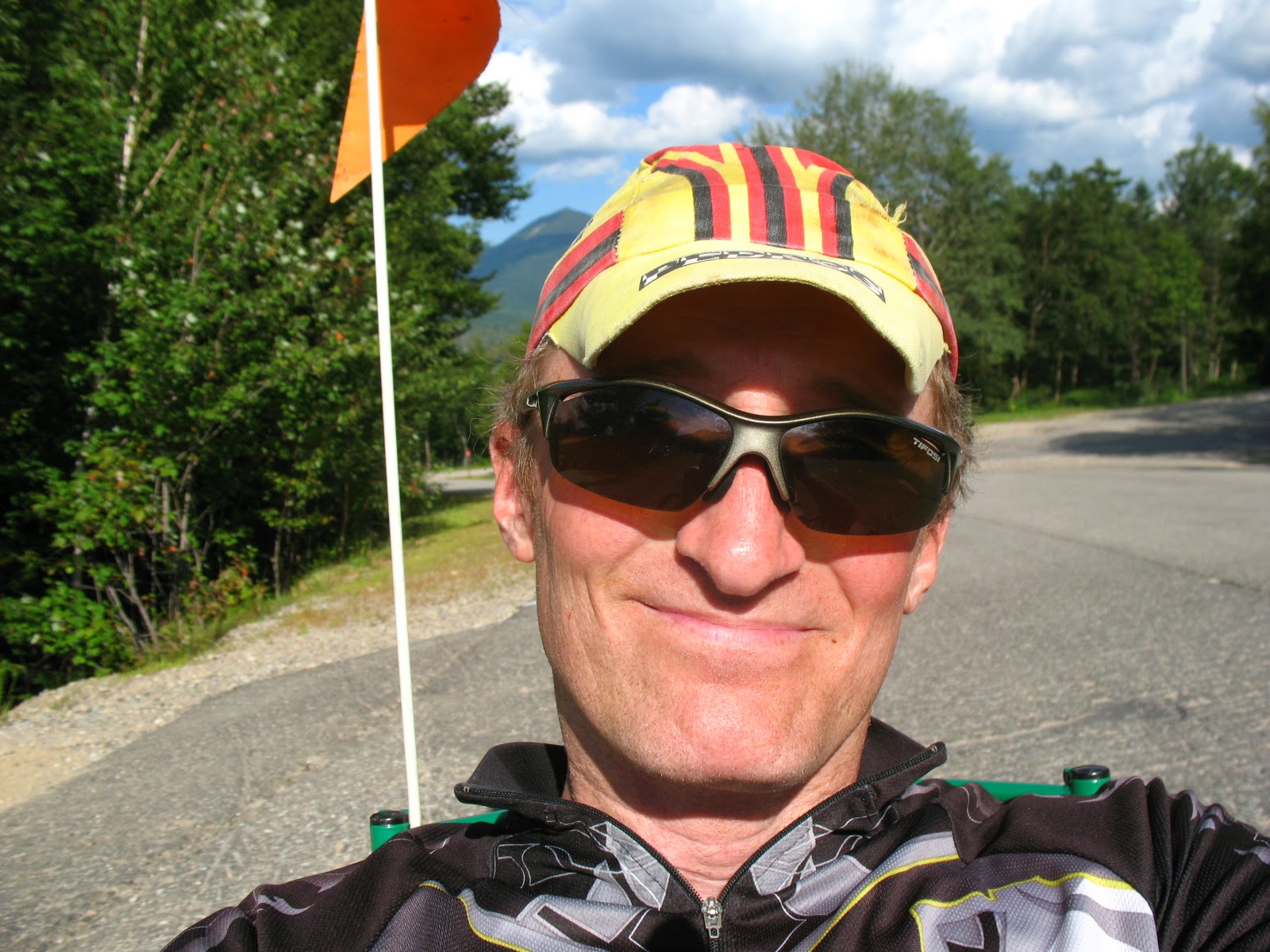
"I started recumbent bike riding. It was a revelation! The wind in my face and the ability to move faster than a shuffle….incredible! I feel it’s what got me through a very difficult time.
I went to my first "ride Philly" this year and raised over $1000. It was amazing! I plan on attending every year.
I am requesting the catrike 700. I grew up being very athletic and know what it feels like to go fast and Id like to feel that again."
Abby

"I had the opportunity to go to a recumbent bike store to test ride several trikes. I haven’t been comfortable enough to ride my bicycle in years, but as soon as I got on the Catrike I felt at ease! As I started pedaling, it just felt amazing. When I’m walking I am always worried about falling over and looking for something to lean on, but when riding I felt like I could go for miles.
I am hoping that with this trike I will be able to ride in the Ride Ataxia Philly this year with my friends and family. I am determined to ride my new trike not only for myself, but to help raise money to help others and cure FA!"
Chase

"'I feel so alive!' and, 'I could do this all day!' is what I said to my parents on the day I went to State College and got to test ride a trike. What a feeling to finally ride around the parking lot with my sister and brother! I quickly began to think of all the places I could ride with my family and friends. Around my neighborhood, to my friend`s house, and along the Susquehanna River are all places I would explore on my trike. But the most exciting and rewarding rides I will take will be in the Ride Ataxia with my family and friends to raise money to find a cure for FA."
Amanda

Mary

It is all about diet, exercise, attitude, and Ataxia Awareness."
The AAI is managed by Ride Ataxia – a FARA program. AAI grants are administered through a competitive application process. Applicants were invited to submit a short summary of their experience with Ataxia and their efforts to stay active. Individuals then selected the most appropriate adaptive cycling equipment to suit their abilities and described how such equipment would help them to reach their fitness goals and improve their quality of life.
With the 2014 grant awards, the AAI has provided equipment for 27 individuals since its 2009 inception. Additionally, Ride Ataxia teamed up with the Texas Irish Foundation specifically to provide equipment in the North Texas area.
Subscribe to:
Posts (Atom)


